Showing posts with label cuban desserts. Show all posts

Wednesday, November 9, 2011

Flan de Leche (Caramel Milk Custard)

This is a different style of making the famous "Flan" the caramel custard of the Spanish speaking world (I think every spanish speaking country has some version of flan).

Now growing up I ate A LOT of flan (different flavors and textures) there's generally two types. Those that are very rich, creamy and dense, similar to a cheesecake texture I would say. Those are typically made with condensed milk, evaporated milk, and eggs sometimes with the addition of cream cheese for extra richness. Usually always full proof.

However today I go into the pantry having flan on my mind... and GASP I had NO EVAPORATED MILK!!! I did have a can of condensed though... and I thought to myself, "Eh if I don't have both cans I'm not making it... well now is a perfect time to experiment and make the one's that are made from scratch using just cow's milk" and so I did :D I've had the one's made with just milk before, and the difference is these are in my opinion a whole different type of flan on their own... NOT IN A BAD WAY... just depends your likes. The one's that are made with just milk have a more "jello" like texture, they are generally lighter in texture, and slightly more eggy (more eggs are used to stabilize)... umm I would describe it as sweet milk jello LOL. my household loves this type of flan too though, it had been forever since I had (literally forever last time I had this type of flan was when I lived in LA back in mid 90's when I was still in elementary school)

So if your interested in a different type of flan give this one a go-go :)

Ingredients for custard:
-4 cups milk
-1 small lime peel (optional)
-1 large or 2 tiny sticks of cinnamon (optional)
-1 cup sugar (you can add wayyyyy more sugar if you'd like LOL. but my mom doesn't like it too sweet)
-1 tsp. vanilla extract
-8 whole eggs

For the caramel:
-1/2 cup sugar
-1/4 cup water

Directions:
(1) Heat milk in a deep sauce-pan, add sugar, together with lime peel and cinnamon sticks (optional I like the hint they add, it's a typical combination in cuban or spanish cuisine to fuse cinnamon and citrus flavors) but it will be just as good with vanilla as flavoring.
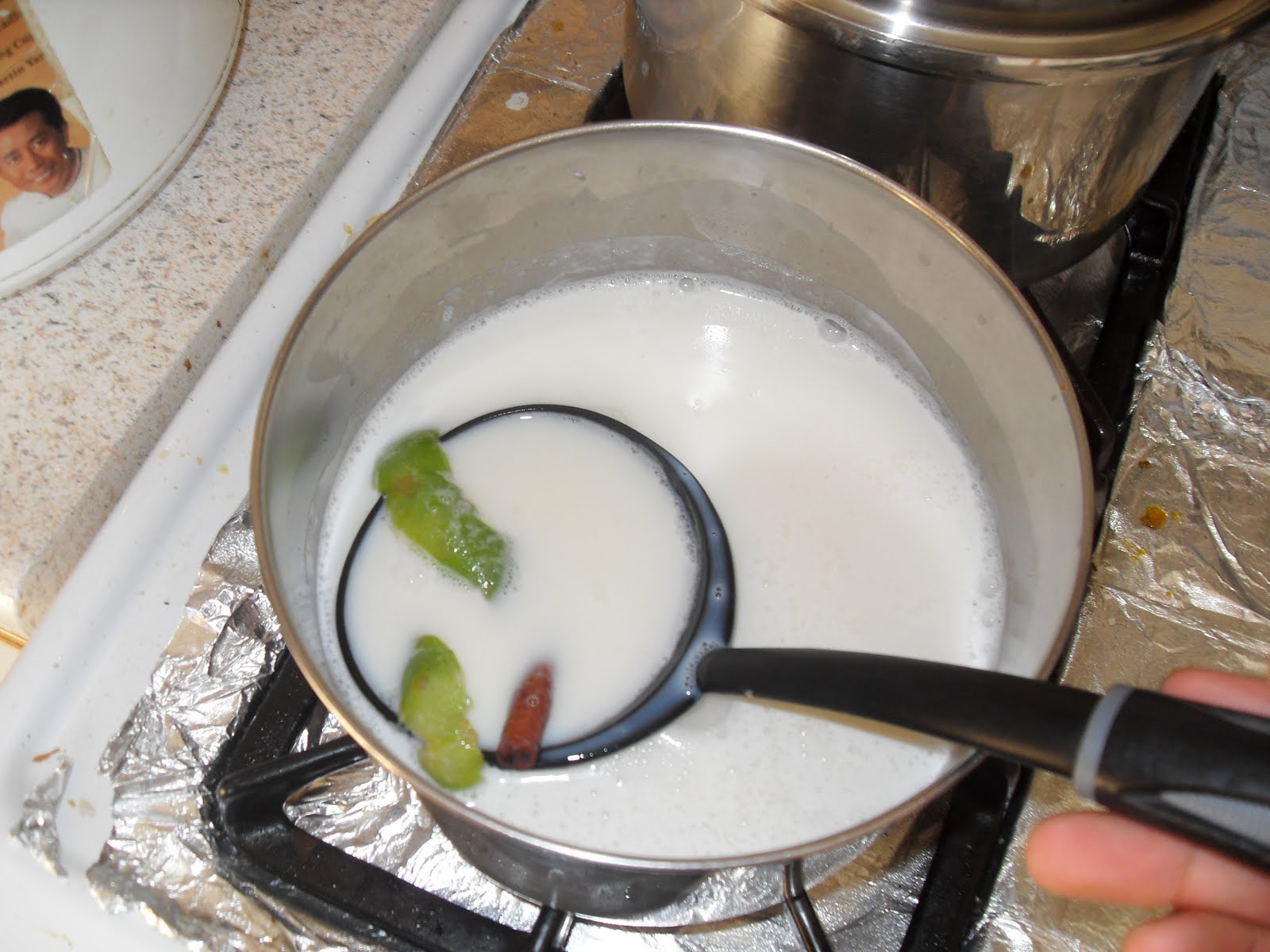
(2) Allow to simmer about 10 minutes to really infuse, then cool, also the purpose of heating the milk isn't only to infuse it with other flavors, it's also done to make the flan more smooth, so the sugar becomes smooth. Remove lime peel, and cinnamon when cooled enough to handle

(3) Now beat 8 eggs with vanilla extract,
and slowly stream in milk mixture until fully incorporated
(4) Set aside mixture, now the caramel part, I personally make the caramel using water and let it reduce out, this let's me do it quick (using super high heat without worrying about burning or clumping while stirring vigorously, the water kinda stabalizes it, won't let it burn right away if you pay attention to it)
Once it starts becoming a dark amber color, pour the caramel into a mold carefully grabbing the edges of the vessel your using coat it, it will seem like it's too much caramel sometimes but keep rotating and spreading the caramel on the vessel until it hardens and coats everything... isn't beautiful :D
(5) Now strain the milk mixture in
(6) Cover it with aluminum foil (or leave it un-covered your choice I just think it's better covered), and place it in a water bath (that just means in another container with some water) in the oven at 350 degrees
(7) Should be done anywhere from 1-2 hours just check it after one hour, if it's too jiggly and looks like it's liquidy too much still then leave it longer, if not then take it out, you can test it with a knife, if the knife comes out clean your good :)
(8) Allow to cool completely, (ideally in the fridge, for several hours and or over night to allow it to set well) however I was in a hurry so I put it in a ice water bath hehe, and then vigorously flipped it our (by putting a plate on the vessel then flipping it out), thus it broke, also when done with just milk the custard is more sensetive and breaks easily
Not my prettiest flan :-/
If interested in other Flan recipes check out:
(1) Flan de Queso (Cheese Flan the riches flan you'll ever HAVE!)

(2) Flan de Coco (rich coconut flan, made using thick coconut milk)

(3) Eggnog Flan (this one will get you in the Christmas mood ha ha)

(4) Pastel Impossible (Moist chocolate cake layered with flan)

Friday, December 31, 2010

Eggnog Flan

As I was flipping through one of my mother's "Foodnetwork" magazines (Vol. 3 number 10) I bumped into a recipe for "Eggnog Flan" on page 102. There was a whole section of cooking with eggnog (because people tend to have leftover eggnog from holidays or it sits in the fridge because "it's too fattening" for the weight conscience hehe... i'm one of them, will have a small glass then ignore it forever)

Anyways, the recipe called for only eggs, the eggnog, and caramelized mold. I started preping my flan, and then tasted the batter I was like "it's kinda bland" so I added 1 teaspoon vanilla extract, and then added some extra-sugar to taste it needed it, to mask the "egginess?". I made the caramel the way I always make it. And saw the instructions for the baking and was like "uummm I'll just do it my way 325 is too low I've made flan probably more times that the woman who wrote this has in her lifetime... n' I don't do it that way..." so pretty much I made the recipe my way and my own lolz.

The results... a rich, creamy, and dense eggnog custard, with hints of cinnamon, and exploding with that strong nutmeg fragrance and taste common in eggnog. Coated in the sinful caramel syrup that had adopted the taste of the eggnog. I will be making this again, not now, but next year ha ha. (I love flan, but my favorite is a version made with cream cheese which is what I almost always make, this adds a nice change or variety :)

Main Ingredients:

-5 large eggs
-3 heaping tablespoonfuls sugar
-4 cups eggnog (store bought, it can be spiked with rum, brandy, whiskey whatever you'd like that's optional, for my Mexican readers you can use "Rompope" and for my Cuban reader's you can use leftover "Creme de Vie" as an alternative)
-1 tsp. vanilla extract
-1/2 tsp. cinnamon powder (optional)
For the caramel:
-1/2 cup sugar
-3 tablespoons water

(1) Pre-heat oven to 350 degrees with a oven pan/ mold bigger than the mold/ pan your gonna use for your flan. Add water enough to fill 1/2 way. Forget about it while making your flan.
(2) First thing is first, in a sauce pan put 2 tablespoons water and 1/2 cup sugar. Bring to a boil on high heat, mixing well, stir constantly, keeping an eye on it so it doesn't burn completely.

(3) When it turns into a golden color, pour into a mold, and move around in a motion that will make most of the bottom and surrounding area of the mold get covered with caramel. BE CAREFUL it is VERY HOT, and if you burn yourself with it... good luck... do not let your skin make contact with the caramel. Set aside.

Directions for the rest:
(1) Beat eggs with sugar and vanilla using whisk, until well incorporated, slowly stream in eggnog until everything is very well mixed and incorporated or your second option throw everything in the blender and blend on low then high for about 30 seconds.

(2) Pour into a mold, passing through a strainer (if you have one, but if you have one use it, I believe it get's rid of air bubbles and makes it more smooth). Sprinkle all over with cinnamon powder. Cover the mold tightly with aluminum foil or some type of lid. This is your "flan mold" you can call it with the "flan" inside.

(3) Place the flan mold in a bigger pan that has been heating in the oven with hot water, in the center of the oven. Cook for about 1 1/2 hours covered. This procedure of cooking we call it "baño maria" (in which something is placed in a hot water bath to cook),
uncover after 1 1/2 hrs. and let cook uncovered an additional20- 30 minutes. It should be completely set by now (I cooked this longer than some flans because it just took longer to set since I didn't use real thick condensed milk)

(4) Take out flan, allow to cool down, then let cool in fridge,
when ready to serve invert it onto a plate, and slice and serve, btw the brown specks aren't dirty stuff it's just specs from ground nutmeg that come already in the eggnog, I also cooked my syrup to a light brown as opposed to dark amber so that's why my flan came out real light. Just preference for this one time, I usually make it dark amber though, but I was craving a caramel sauce similar to my grand-aunts which is usually light :)

For some other flan recipes you might like check out the following:
(1) Chocoflan (Flan with a layer of Chocolate Cake)
(2) Flan de Queso (Cream Cheese Flan a mix of Cheese cake and Flan).... this one is my favorite flan...
(3) Flan de Coco (Coconut Flan)

Tuesday, March 16, 2010

Flan de Coco (Coconut Flan)

I make flan quiet often at my house, it is always rich, smooth, and delicious. I wanted to make a coconut flavored flan, and let me tell you, it came out amazing. It was rich, dense, and had a buttery texture, somewhat firm yet melted in your mouth, heavy but light. It's so hard to describe...

It also helps that I am a big fan of coconut and flan so this marriage of caramel custard and coconut really appeal to my sense of taste.

Give it a try I hope you enjoy it as much as I do :)


Ingredients for custard:

-1 can of coconut cream (or thick coconut milk) unsweetened
-1 can sweetened condensed milk
-5 eggs (both whites and yolks)
-1 teaspoon vanilla extract (coconut extract would work great but I didn't have it)

Ingredients for caramel:
-1/2 cup sugar
-2 tablespoons water

Directions:
(1) Pre-heat oven to 350 degrees with a oven pan/ mold bigger than the mold/ pan your gonna use for your flan. Add water enough to fill 1/2 way. Forget about it while making your flan.
(2) First thing is first, in a sauce pan put 2 tablespoons water and 1/2 cup sugar. Bring to a boil on high heat, mixing well, stir constantly, keeping an eye on it so it doesn't burn completely.

(3) When it turns into a golden color, pour into a mold, and move around in a motion that will make most of the bottom and surrounding area of the mold get covered with caramel. BE CAREFUL it is VERY HOT, and if you burn yourself with it... good luck... do not let your skin make contact with the caramel. Set aside.

(4) In a blender (or you can whisk by hand), add the coconut milk or cream (unsweetened), condensed milk, 5 eggs, and vanilla extract. Blend or whisk by hand.

(5) Pour into a mold, passing through a strainer (if you have one, but if you have one use it, I believe it get's rid of air bubbles and makes it more smooth). Cover the mold tightly with aluminum foil or some type of lid. This is your "flan mold" you can call it with the "flan" inside.

(6) Place the flan mold in a bigger pan that has been heating in the oven with hot water, in the center of the oven. Cook for about 1 1/2 hours. This procedure of cooking we call it "baño maria" (in which something is placed in a hot water bath to cook)

(7) Take out flan, allow to cool down, then let cool in fridge, when ready to serve invert it onto a plate, and slice and serve :)
I know the below picture didn't come out so well but I wanted to put it to show you guys how smooth it came out, with no air bubbles or anything :)
PLEASE NOTE:

The coconut milk and or cream that I buy at stores is THICK and unsweetened. It is the first press when squeezing the milk out of the coconut. (which is made by finely grated a mature brown coconut, adding hot water to it, swishing it, and squeezing it through a strainer. This first press is very thick and rich, the second press is more watery and the presses after that even more so). I know this because my Filipino friend and her mother (Shantall and Herminia) occasionally make coconut milk for Suman (sticky coconut rice and ginger wrapped in banana leaves)

The brands I use are Chaokoh, Mae Ploy. The way you know if a coconut milk is thick is look at the fat content, the higher the thicker.

I know most Hispanic stores carry more watered down coconut milks like "GOYA" brand, which I use and prefer for some rice dishes sometimes. I usually buy coconut milk at Asian stores like "99 Ranch Market", "Seafood City", "Bangluck Market", etc. but for this flan I use a thick rich coconut cream (which is the rich fatty top that rises when you squeeze coconut milk and let it rest.) and or just thick coconut milk. I do not know how this flan will come out if you use a thinner one but it should work fine, I hope you guys enjoy it :)

P.S.
If you wanna read up a little on the back round of flan/ cultural aspect check out my first post I made on "Flan" type desserts, my "Flan de Queso" (cream cheese flan):

http://nathanscomida.blogspot.com/2008/09/flan-de-queso-cheese-flan.html

Also some tips I want you guys to know that you don't need any special equipment to use flan, you can use ANY mold or pan you have that you like or whatever is on hand, heck I've made flan in loaf pans before, the important thing when cooking a flan is technique. As long as you coat something with the caramel, cover it tightly and bake it in a water bath you will get good results and of course the recipe is important :) it has to be rich and dense enough to hold it's shape :) another tip is sometimes (rarely) and this happened to me today, when I inverted my flan it wouldn't un-stick (I know this isn't a word but you guys get it), so I quickly put hot water in my sink, and gently dipped the bottom of my mold to loosen the caramel, took out, wiped then inverted it. You can make flan in individual ramekins too or oven proof dishes.

Another tip I want to add, I know the sauce pan where you make the caramel, you always have some caramel left that sticks to the sauce pan, what I do to clean it is I add water and bring it to a boil and cover it for awhile, the steam will loosen the caramel and any caramel will dilute into the water, then you can just pour out the hot water and wash as you normally would.

Lastly (yes another tip) if you are short on time and need to serve it immediately after cooking, put in in several ice water baths in your sink, I put water in my sink with lots of ice cubes, and put the flan in there, when all the ice melts I drain the water then make another ice bath until it cools well or at least to room temp. then invert it.

Friday, March 5, 2010

Natilla (Milk Custard)

Growing up my Tata (grandmother) use to make these cute little rich Natillas pronounced "na-tee-ya" (milk custards) her version was infused with lots of cinnamon and vanilla, dotted with raisins, and served in these little Styrofoam cups dusted with cinnamon powder.

For winter we would eat them warm and hot, but I remember in hot summers she'd cool these custards in the fridge, and I just couldn't get enough of them, they were rich, sweet, cinnamon y.

However my grandmother would always make 2 batches, one with raisins, and one without since my father HATES raisins, and occasionally the Natilla was poured into a large container/ mold to eat family style with everyone spooning into their plate as much Natilla as they wanted.

Natilla is one of those desserts that always brings me fond memories of my Tata's cooking, and child hood sweets. Natilla along with "Pudin de Pan" (Cuban style bread pudding smothered in syrup) is something I grew up eating lots of, and we still make them several times a year :)

Ingredients:

-4 cups of whole milk
-1/2 stick butter (optional)
-1 cup of white sugar
-1 large or 2 small sticks of cinnamon
-1 teaspoon vanilla extract
-peel of 1 lime, or lemon or 1/2 an orange (optional my older sister HATES citrus in natilla)
-5 egg yolks
-1/2 cup cornstarch
-1/4 cup water or milk (a little more or less to dilute cornstarch)
-1/2 cup raisins (optional)

To garnish:
-dust with a few pinches of cinnamon powder

Directions:
(1) In a medium pot, add whole milk, sugar, cinnamon sticks, and citrus peel if using. Leave at medium high heat, stirring occasionally.

(2) Meanwhile in a medium bowl add cornstarch. add water little by little to dissolve cornstarch whisking with fork until the cornstach dissolves into a white milk like constistency, whisk in egg yolks, and set aside. This will be your "cornstarch and egg yolk slurry"

(3) By now you milk should be hot and kind boiling, keep an eye on it while your preparring the slurry or it may over flow, if it boils lower heat to prevent spillage.

(4) So now that it's bubbling, quickly whisk in cornstarch and egg yolk slurry, with a large whisk, and whisk non stop in one direction or else your custard will lump up and break, raise the heat, and when it starts thickening

(5) The first boil it gives up, like bubble or burst, quickly turn off heat, remove and pour into a mold. Or pour into small individual serving bowls.
(6) Dust with cinnamon :)

PLEASE NOTE:
(1) If you want a richer custard you may add 1/2 a stick of butter to heat together with the milk, my grandmother sometimes does this sometimes doesn't

(2) The egg yolks I used were from my friends house, her chickens produce beautiful strong golden yellow egg yolks that color everything a strong yellow which is why I used them, if using typical store bought egg yolks you won't get this color unless you use a lot of egg yolks which is unnecessary. This may sound like taboo, but my grandmother and me, we use "Bijol" (anatto seed powder) or "Colorante" (coloring) to make the natilla yellow if we use store bought eggs to give it a rich color. When doing this be sure you add the coloring when your simmering the milk so it dissolves completely.

(3) I know 1/2 cup cornstarch may seem like a lot for some cubans, but it's actually "4 cucharadas grandes" which is the measurement my grandmother uses, which is 4 regular eating tablespoons with humps on them what we in Spanish call, "cucharadas colmadas" (peaked tablespoons) I measured them out and it was actually 1/2 cup. So I guess the cornstarch to milk ratio is 1 heaping tablespoonful per cup.

(4) The one I made in the picture, had no butter, or raisins, and I left out the vanilla and only used cinnamon and orange peel, it was delicious and light yet rich :)

IF YOU LIKE THIS RECIPE... you may want to check out my post for "Leche Frita" (fried milk custard squares)

Wednesday, February 11, 2009

Galleta Cubana Con Dulce Guayaba y Queso (Cuban Crackers with Guava and Cheese)

I was wondering if I should even post this (it is ridiculously simple, but trust me we have simpler snacks and sweets than this ha ha) but any who I'm here to share, and that's what I'll do, who knows maybe some other people have seen "Galletas Cubanas" (Cuban crackers) and never bought them because they don't know what to do with them. I decided to blog about them when I got home from school (hungry) and ate a mountain of white rice with cuban "Albondigas Con Salsa de Tomate" and a salad, but then my sweet tooth kicked in (like always) and there was a bag of these sitting on the counter and I had everything on hand thus I said to myself, "Why not take a picture of this simple joy and share it"

Cuban crackers hmmm... let see how I can describe them... well they are not salty, very plain, yet buttery, thick/ sturdy, crunchy but somehow easily breaks, feel's sort of powdery to. It's hard for me to describe, it makes a really good bed for different spreads or just ham with cheese, or ham with cream cheese, even for a deviled ham dip (yes Cubans make deviled ham dips that will be left up to another post) BUT in this post I will show it with guava paste and cream cheese. I don't know any Cuban that doesn't love Guava paste especially paired with a cheese in any shape way or form, as Marilyn from "My Cuban Traumas" once told me, "Nos corre la Guayaba por la sangre" (translates to, "Guava runs through our vains")

I love them, but not all "Galletas Cubanas" are created equally, from experience I have bought pre-packaged one's that are "Faraon" they tend to be really old, they are almost chewy? Cuban crackers are not suppose to be chewy or flexible or thin like the "Faraon" brand one's...

The one's I buy come from "Portos Bakery" which here in Southern California is a very reputable well known Cuban bakery, and is the only good Cuban bakery in California in my opinion. They have the authentic fresh made Cuban bread, the pastries, etc., my family goes there usually from Sunday brunch, we order an assortment Pastelito's de Guayaba (Guava Strudels), Pastelitos de Carne (Cuban Meat Pies stuffed with ground beef), and Cuban Sandwiches and Medianoches to drink we usually get "Batidos" (different types of shakes Guava, Mango, etc) or our Cafe Cubano.

I don't live to far from Portos but not close enough either, luckily I have a little "Bodeguita" near me (a small store, it carries many Cuban products) and they get their "Galleta's Cubanas" from Portos Bakery delivered. The bag has no labels or names only the Portos logo, they sell quickly there and are delicious and fresh. Although they can last up to 3 weeks or more.

Ingredients:
-Galleta Cubana (Cuban Cracker)
-Philidalphia Cream Cheese
-Guava paste (the best one's are from flat, round, tin cans, I use "Goya" brand)
Directions:
(1)Grab 1 Galleta, spread generous amounts of cream cheese on it.
(2)Top with a pair of thick slices of guava paste.
(3)Repeat process to make more. Then enjoy! Simple I know :)

(4)These make really good finger foods at parties, usually in our gatherings at home we have big plates full of a bunch of these and they finish quickly.

OTHER RECIPES THAT I HAVE THAT USE GUAVA PASTE:

(1)Frituritas de Guayaba

(2)Cascos de Guayaba y Refresco de Guayaba (Guava shells in Syrup and Guava drink)

(3)Guayaba en Almibar (whole Guava in syrup)

P.S. (not important just me rambling)


Cuban crackers in Spanish is called "Galleta Cubanas". Although "Galleta" directly translates to cookie, but it can also mean "cracker" depending how it's used (there is no word for crackers in spanish, we combine the name "cookie" with other words to refer to it, like saltine crackers we call it "Galletas Saladas" translates to "salty cookie"

In "cuban" spanish (maybe in other countries spanish to) Galleta can also mean "slap" for example, "Te voy a dar una galleta" it can mean "I am going to slap you" or "I am gonna give you a cookie" depending on the tone. If you wanna emphasize the "slapping" making it sound like a super hard angry slap and just wanna sound big you can call it a "Galletazo" for example in this context it will always mean slap, specifically a big hard slap, "Te voy a romper la boca de un galletazo chico!" english equivalent, "Boy, I'm gonna break your mouth with one big @$$ slap" okay enough of that, just thought it would be interesting to share. (Cuban spanish can be very different in word usage and pronaunciation, we tend to skip "s" and "r" in words and shorten things, etc. it's more similar to the Spanish of Spain's "Canary Islands")

Monday, February 9, 2009

Arroz Con Leche de mi Tata (My Grandmas Rice Pudding)

I LOVE my Tata's (grandmother's) rice pudding.

Different countries have their own version of "Arroz Con Leche" and different cooks have their own personalized versions. It varies greatly, even in flavor and texture, the common thing is there's always a dairy and rice.

So what makes my grandmother's version worthwhile and delicious? Well it's so rich, creamy, and dense infused with a light lime or lemon flavor and cinnamon flavor. It incorporates whole milk, velvety evaporated milk, and rich creamy sweet condensed milk... as if that wasn't enough the butter gives it an unsurpassed richness and density. The short grain rice also makes it more creamy, more like risotto.

It's like "Arroz Con Leche" on steroids.

Ingredients:
-2 cups short-grain rice (such as Valencia, , Bomba, Calaspara, Calrose, even other types of Japanese & Korean short-grain rices, oh almost forgot Arborio Rice also works here.)

-4 cups water
-1 big pinch of salt (about 1/4- 1/2 tsp. salt)
-2 cinnamon sticks
-2 small or 1 medium lime only the peel (lemon peel can be used in it's absence)
-3 cups whole milk
-1 can evaporated milk
-1 can sweetened condensed milk
-3/4's cup white cane sugar
-4- 8 tablespoons butter (that's about 1/2- 1 stick of butter)
-1/2- 1 cup regular raisins (optional some people hate raisins)
-ground cinnamon (to dust)

Directions:
(1)In a large pot put rice and wash rice well, wash and drain about 3-5 times until water runs clear.

(2)Add water, salt, lime peel, and cinnamon stick, bring to a boil on high heat (stir occasionally while waiting for it to boil) once boiled stir, cover, and let simmer on low heat for 25-30 minutes on the lowest heat until rice absorbs water.

(3)Meanwhile in a big bowl mix evaporated milk with whole milk, whisk in sweetened condensed milk and incorporate 3 milks well. (whatever you can't get out of the sweetened condensed milk can don't worry grab a spoon and scoop it out and eat it as a treat for you ha ha)

(4)Once the rice absorbs all the water, slowly add 3 milks mixture and stir in , bring heat back to high heat, and stir every 5 minutes occasionally until milk comes to a raging boil with the rice.

Trust me at first it will feel like you added to much milk but the rice will absorb a lot of it and thicken with time.
(5)Lower heat to low and stir occasionally for about 10 minutes total. After 5 minutes of of boiling on low the rice should have absorbed some of the milk and thickened a bit, check if grains are tender, add in white sugar, stir well, taste and see if you want to add more sugar to taste.

(6)At this point let it cook an additional 5 minutes, add the butter towards the end, and add the raisins to stir until everything is well incorporated.


(7)Turn off heat and dust lightly with ground cinnamon. (Your probably wondering why I have 1 pot and 1 other ceramic filled with rice pudding the reason is my father and little sister do not like raisins, so before adding the raisins I set aside some without raisins for my Dad and sister and whomever else may want to eat it without raisins)

P.S.

This can be eaten as dessert at any temperature desired, it can be eaten hot, warm, room temp., or cold, it doesn't matter it's whatever you like. In hot day's I like it cold, in the winter I like it piping hot or warm. You can serve it in individual bowls and dust with cinnamon on those or like in my house we just make a big batch and everyone just get's their own bowl and goes help themselves. You can also eat this as a snack or heck even a big bowl for breakfast or late night meal ha ha.

Also, in case your wondering why I call my grandma "Tata" it's because she say's that's what they called grandmas in her family grandpa was called "Tato". I went to do some research and it came up that it's sometimes used in Madrid, Spain by some to refer to grandpa or grandma, it is used when the child is to young to properly say grandpa or grandma I think that's what came up, I don't know, some Cubans also call their grandma "Tata" and some Spaniards do to., I'm grown up well kinda and still call my grandmother "Tata" and she'd kill me if I called her anything else she say's "Abuela" (Grandma) or "Abuelita" (Granny) make her feel old.

REALLY IMPORTANT NOTE!:
*If you want to speed up the cooking time, while the rice is cooking with the water for about 25-30 minutes or so, you can mix the 3 milk mixtures and bring it to a boil then leave it on really low heat, that way when the rice has absorbed the water and you have to add the milk you won't have to wait long for the milk to come to a boil, after it boils you'll be done in like 10 more minutes.

*Well that's all I have to share for today :) Til next time ha ha.