Showing posts with label spanish food. Show all posts

Friday, February 24, 2012

Potaje de Alubias facil con todo hervido (Easy Spanish Bean Stew with everything boiled))

This is another way I like to prepare beans, it is very healthy, simple, delicious and with ingredients that should be readily available to anyone. What I like about this recipe is that all the aromatic vegetables (garlic, onions, bell peppers, tomatoes) are boiled whole, and thrown in the pot with the beans, as opposed to having to chop them sautee them in the oil which is typical of a sofrito used in Cuban and Spanish cooking oftentimes for bean stews, that are then added to the beans towards the end of the cooking process. This way I just throw everything in one pot when I want to prepare a Spanish bean stew and still have good results.

The recipe I have here is completely vegetarian, but if you want this to be a complete meal with no sides and just eat it with bread or rice, you can easily boil some pork ribs, whole sausages, ham hocks, chunks of ham, chunks of beef, etc. along with the beans for protein & flavor.

After the beans are cooked I like to puree the vegetables used to cook them and then strain them into the stock (to remove any seeds, the garlic skin, etc.) that way I don't waste anything, however the pureed and strained garlic can be a little over powering for those who don't like a strong garlic taste, but to me it's delicious... the potato in the recipe is used as a thickener and gives the stew a nutty flavor so I suggest you don't omit it but it's your choice :) Anyways here's how i made it.

Ingredients:
-1 lbs of dried beans (I used pintos this recipe works good with white beans, mayocoba beans, red beans, black beans, and pretty much any bean you have on hand, just don't use it for lentils or peas in my opinion)
-1 large tomato
-1 whole onion, outer skin removed, ends removed
-1 whole head of garlic
-1 whole green or red bell pepper
-1 large potato, peeled and washed
-1/4 cup extra-virgin olive oil
-salt to taste
-1 teaspoon ground cumin

Directions:
(1) Rinse beans and drain, you can soak them overnight if desired.
(2) Dump all ingredients in the pot with the beans EXCEPT the salt and cumin, cover with enough water (don't drown it in water maybe like 1- 2 inches water above the beans)
(3) After 1 1/2- 3 hrs your beans should be tender (depends how old they are, if you soaked or not, etc.) but test them by pressing them, here's how it looked for me when it was tender
(4) Remove the vegetables,
and puree them in a blender with some of the bean liquid
(5) Strain them back into the pot of beans, add salt to taste, the spices, and allow to boil for 5- 10 additional minutes and your done should look like this :)
P.S. My grandmother would always fry all the aromatics chopped up in generous amounts of olive oil or lard (garlic, onions, bell peppers, tomatoes), and cut the garlic in half (only use 6-8 cloves) for black beans she would omit the tomato & rarely used potato. But I learned this way of making it from other blogs and stuff and appreciate it's simplicity :)

Sunday, February 5, 2012

Potaje de Garbanzos Con Camarones (Garbanzo and Shrimp Stew)

If you've read this blog before you know I love all sorts of legumes, I love them cooked on their own, stewed with meat, with other vegetables, etc. However I have never had them cooked with seafood but saw in many other Spanish blogs that a lot of Spaniards combined garbanzo beans as well as white beans with seafood (such as with salted cod, shrimp, clams, squid, etc.)

I saw it as very odd since I never grew up eating that combination of ingredients (grew up eating lots of Spanish and Cuban bean stews but never with seafood usually with just pork, beef and sausage though some Cubans make the Garbanzos with salted cod for lent)

Well one day I bumped into a recipe that appealed to me at a blog called "Los Tragaldabas" that recipe combined Garbanzos with Shrimp cooked in a machine called "thermomix" which I'm not familiar with, anywho I looked over the recipe and adapted it a little bit to my style and using my regular pots and pans as opposed
to machine known as "thermomix"... and let me tell you I'm glad I made it, it was a hit in my house, it's lighter than the typical bean stews I make at home with pork and beef, a good alternative when you want something lighter than the previously mentioned, healthy, low in fat, high in fiber, satisfying and of course really warm and comforting in this weather :) Give it a try you'll be pleasantly surprised. I know I was.


Ingredients:

-1/2 lbs. dried garbanzo beans (washed well, drained, then soaked overnight in water)
-1 1/2 lbs. shrimp (cleaned, de-veined, and shells removed, reserve shell to make shrimp stock)
-extra-virgin olive oil
-1/2 a large onion finely chopped
-1/2 a large bell pepper finely chopped (any color or a mix of red and green)
-3 cloves garlic finely minced
-2 fresh ripe tomatoes finely chopped (tomato sauce will work here too if you don't have fresh tomatoes)
-salt to taste
-1 bay leaves
-1/2 tsp saffron ground up, or "Colorante"/ "Bijol" or achiote to give it a golden tinge (optional)

Before you put everything together directions
(1) Start off by draining garbanzos you soaked over night, and bringing to a boil in new water, once boiling lower heat to medium low, cover for about 1 1/2- 2 hours until as tender as you like. Turn off heat and reserve.

(2) Now when peeling the shrimp this is completely optional but I will get the thick red liquid from it's head, and reserve it in a bowl, I fry this in the oil with the aromatics it gives it a good seafood flavor but you can skip this if it freaks you out. If you don't mind harvest that red orange liquid and set aside and reserve
(3) Use the reserved shrimp shells to make a stock, by covering the shells with water, bringing to a boil with 1 bay leaf for 10- 15 minutes, skimming off any impurities on top, strain the stock and reserve to make the rest of the dish.

Directions for putting everything together:
(1) Heat a large deep pan with extra-virgin olive oil and sautee onions, bell pepper, and garlic until fragrant 5- 8 minutes over medium high heat. Add the red orangish shrimp thing
Add chopped tomato and sautee another 5 minutes.
(2) Add drained cooked garbanzo beans, shrimp stock (enough shrimp stock to barely cover the garbanzos, salt to taste, saffron or bijol or other coloring (optional) bring to a strong boil, and let simmer about 5 minutes.

(3) After boiling 5 minutes add peeled cleaned shrimp, stir well, when shrimp change color to pink turn off heat.
(4) Garnish with parsley or cilantro if you'd like :) I served it over white rice with a salad. You can serve it in a deep bowl as well with bread and a salad if you don't want to eat rice.

PLEASE NOTE:
(1) I made this dish from scratch, BUT if you feel it's too much hassle to prep the shrimp, making the shrimp stock, and cooking the garbanzos from scratch you can use 2 8 oz. cans of garbanzo beans drained, water in place of the shrimp stock but add a cube of shrimp bouillon or fish bouillon powder, and buy the shrimp already peeled.

(2) I didn't use any spices with this dish because I wanted to have a fairly clean taste, but my mother told me to add either 1/2 a teaspoon of ground cumin or 1/2 teaspoon sweet smoked Spanish paprika for her taste because she said it needed a little something extra. Oregano would be good too. Next time I'll probably do that :)

Wednesday, November 9, 2011

Flan de Leche (Caramel Milk Custard)

This is a different style of making the famous "Flan" the caramel custard of the Spanish speaking world (I think every spanish speaking country has some version of flan).

Now growing up I ate A LOT of flan (different flavors and textures) there's generally two types. Those that are very rich, creamy and dense, similar to a cheesecake texture I would say. Those are typically made with condensed milk, evaporated milk, and eggs sometimes with the addition of cream cheese for extra richness. Usually always full proof.

However today I go into the pantry having flan on my mind... and GASP I had NO EVAPORATED MILK!!! I did have a can of condensed though... and I thought to myself, "Eh if I don't have both cans I'm not making it... well now is a perfect time to experiment and make the one's that are made from scratch using just cow's milk" and so I did :D I've had the one's made with just milk before, and the difference is these are in my opinion a whole different type of flan on their own... NOT IN A BAD WAY... just depends your likes. The one's that are made with just milk have a more "jello" like texture, they are generally lighter in texture, and slightly more eggy (more eggs are used to stabilize)... umm I would describe it as sweet milk jello LOL. my household loves this type of flan too though, it had been forever since I had (literally forever last time I had this type of flan was when I lived in LA back in mid 90's when I was still in elementary school)

So if your interested in a different type of flan give this one a go-go :)

Ingredients for custard:
-4 cups milk
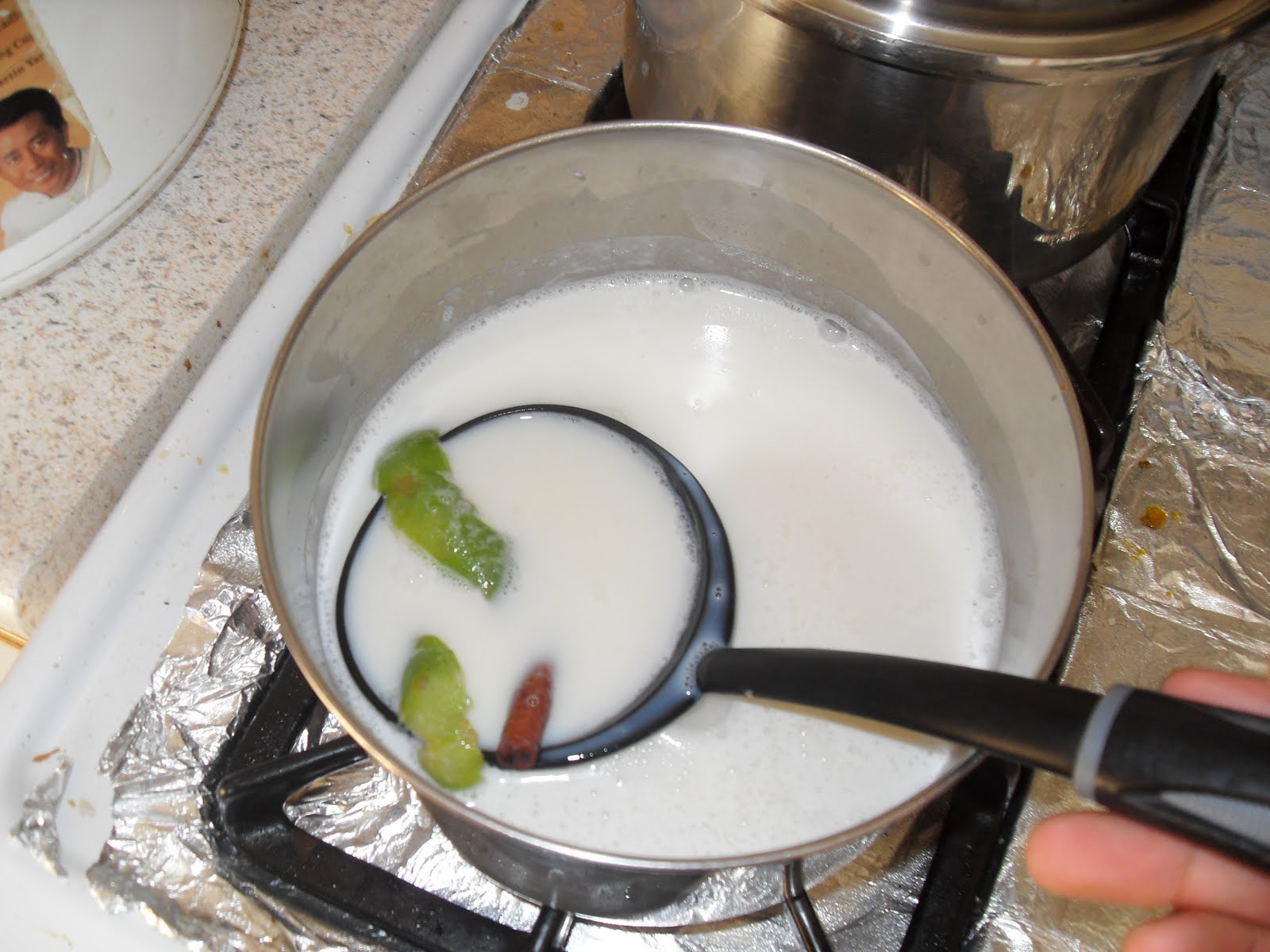
-1 small lime peel (optional)
-1 large or 2 tiny sticks of cinnamon (optional)
-1 cup sugar (you can add wayyyyy more sugar if you'd like LOL. but my mom doesn't like it too sweet)
-1 tsp. vanilla extract
-8 whole eggs

For the caramel:
-1/2 cup sugar
-1/4 cup water

Directions:
(1) Heat milk in a deep sauce-pan, add sugar, together with lime peel and cinnamon sticks (optional I like the hint they add, it's a typical combination in cuban or spanish cuisine to fuse cinnamon and citrus flavors) but it will be just as good with vanilla as flavoring.
(2) Allow to simmer about 10 minutes to really infuse, then cool, also the purpose of heating the milk isn't only to infuse it with other flavors, it's also done to make the flan more smooth, so the sugar becomes smooth. Remove lime peel, and cinnamon when cooled enough to handle

(3) Now beat 8 eggs with vanilla extract,
and slowly stream in milk mixture until fully incorporated
(4) Set aside mixture, now the caramel part, I personally make the caramel using water and let it reduce out, this let's me do it quick (using super high heat without worrying about burning or clumping while stirring vigorously, the water kinda stabalizes it, won't let it burn right away if you pay attention to it)
Once it starts becoming a dark amber color, pour the caramel into a mold carefully grabbing the edges of the vessel your using coat it, it will seem like it's too much caramel sometimes but keep rotating and spreading the caramel on the vessel until it hardens and coats everything... isn't beautiful :D
(5) Now strain the milk mixture in
(6) Cover it with aluminum foil (or leave it un-covered your choice I just think it's better covered), and place it in a water bath (that just means in another container with some water) in the oven at 350 degrees
(7) Should be done anywhere from 1-2 hours just check it after one hour, if it's too jiggly and looks like it's liquidy too much still then leave it longer, if not then take it out, you can test it with a knife, if the knife comes out clean your good :)
(8) Allow to cool completely, (ideally in the fridge, for several hours and or over night to allow it to set well) however I was in a hurry so I put it in a ice water bath hehe, and then vigorously flipped it our (by putting a plate on the vessel then flipping it out), thus it broke, also when done with just milk the custard is more sensetive and breaks easily
Not my prettiest flan :-/
If interested in other Flan recipes check out:
(1) Flan de Queso (Cheese Flan the riches flan you'll ever HAVE!)

(2) Flan de Coco (rich coconut flan, made using thick coconut milk)

(3) Eggnog Flan (this one will get you in the Christmas mood ha ha)

(4) Pastel Impossible (Moist chocolate cake layered with flan)

Sunday, August 28, 2011

Paella de Mariscos (Seafood Paella)

Paella de Mariscos/ Seafood Paella is typically short grain rice cooked with well a mixture of seafood. In my family it's well the only thing they consider "Paella" Now variations with sausage, pork, chicken etc. combined with seafood we call it "Paella Mixta"/ Mixed Paella (mixed Paella because well it mixes meat and seafood)

Now to all those purist who argue on how a Paella is made, just so you know the AUTHENTIC Paella from VALENCIA Spain resembles nothing of what a Paella is thought of around the world. The AUTHENTIC PAELLA called "Paella Valenciana" it is made with olive oil, rabbit, snails, some type of broad beans, grated tomato, garlic, smoked paprika, rosemary, a good stock and short-grain rice. Nothing more nothing less. How Paella evolved into many, many other variations I don't know hehe, but hey the more the merrier right? and for those that say you can only make it using "Saffron" and otherwise it's taboo I wanna say bull $h!t, yes saffron has a nice fragrance but many people in Spain use "Colorante Alimentario" when makiing Paella which is a powdered coloring that makes rices yellow, when I use that I use a brand called "Bijol" which is available in most Latin stores in the states. In my opinion the key to a good Paella is cooking down the aromatics (garlic, tomato, onion whatever you used) and having a very good flavorful stock, also water to rice ratio.

Now that I got that out of the way MY VERSION of Paella, my version of Paella is made with only seafood shrimp, mussels/ clams, calamari, scallops or fish chunks cooked in a seafood stock with spices and a good sofrito of onions, garlic, and bell peppers. Garnished with fire roasted red bell peppers and peas. This recipe is a combination of my 86 year old grandmothers recipe well what I know works in the kitchen (she insisted the one her father made had cumin and sweet smoked spanish paprika so I used them in this Paella, and she didn't want any tomato in the sofrito so that's what I went with and after all today when I made this Paella I made it for her, and my goal was well to make her happy so what she said goes :)

Ingredients for stock:
-water (enough to fill a large pot half way)
-shrimp shells (reserved from peeling shrimp)
-mussel or clam broth (reserved from opening the clams or mussels)
-salt to taste

Main Ingredients:

-1 lbs. short grain rice (3 cups)
-1 large squid (cleaned, gutted, skin removed, cut into rings, or squares)
-1 lbs. shrimp, cleaned, de-veined, shells removed and reserved to make stock
-1 lbs. mussels or clams (or a mix of both I used just mussels this time)
-1/2 lbs. firm white fish filets cut into chunks or scallops (optional your choice I like em in there I used scallops this time)
-1 onion minced
-1 green or red bell pepper minced
-4-6 cloves garlic finely minced
-1/2-1 cup dry white wine or 1 can of a light colored beer
-1 tablespoon "Pimenton" (sweet smoked Spanish paprika)
-1/2 tsp. ground cumin -1- 2 bay leaves
-powdered saffron or "colorante alimentario" or "bijol" to give the rice it's yellow color
-6 cups of a good seafood stock (see recipe)

Ingredients for garnishes
-1 fire roasted red bell pepper (cut into strips)
-1 handful of peas

Directions for stock:
(1) Grab the reserved shrimp shells, throw in pot with water, bring to a boil and leave alone for about 10- 15 minutes then turn off heat, and strain. Set aside.

(2) Meanwhile get mussels or clams, scrub them well, and put in a small pot with oil heat stirring occasionally until they open. They will release juice, strain the juices through a very fine strainer, reserve them and add it to your shrimp stock.

(3) Very simple right that's the stock you will use to cook your rice :) NOW PLEASE NOTE THE FOLLOWING I understand some will buy pre-cooked frozen mussels or clams, and their shrimp will already be peeled thus not being able to make the stock from scratch, that is OK don't freak out, instead of making the stock use water but be sure to boil the water and add 2 cubes of shrimp bouillon and set it aside, it's not EXACTLY the same but it will work, or buy a good quality seafood stock.

Directions for making the Paella:
(1) Heat a very generous amount of olive oil over high heat in a large wide pan (preferably a Paellera) if you don't have one use a gigantic non-stick pan, or large wide round metal pan either will work. Add your calamari/ squid to the oil and stir, it will release juices allow it to reduce until it's just oil.

(2) Now add your garlic, onions, bell pepper and bay leaves stir occasionally and lower heat to medium high. Allow this mixture to cook 5-8 minutes until fragrant and translucent.

(3) Add your rice, sweet smoked spanish paprika & cumin and give it a good stir so everything get's mixed, well.
(4) Add your boiling/ hot seafood stock (that you either made yourself, or used bouillon cube, or bought pre-made). Add your saffron (I grinded about 1 tsp. in a mortar) or you can use about 1/2 - 1 tsp bijol or other substance that will color the rice yellow. Allow everything to come to a boil over high heat, give a good stir and allow to boil over high heat uncovered approximately 10 minutes, then lower heat to medium high and allow to boil uncovered another 8 minutes,

(5) Add your raw shrimp, scallops or fish filets and press into the Paella lightly, insert the mussels and clams and allow to cook uncovered an additional 4 minutes or so. Remove from heat, cover with a cloth, and allow to rest 5- 10 minutes

Directions for garnish (optional)
(1) Arrange fire roasted red bell peppers cut into strips and scatter peas over the paella just for some eye appeal I guess :) To make your own fire roasted red bell pepper, simply put the red bell pepper fresh over a flame on your stove and move around with tongs until charred all over, wrap in plastic bag and allow to sweat for about 5-10 minutes, then peel off skin and slice into long strips :)

P.S.
Yeah sorry I didn't take so many pictures, but I still havent gotten a new camera, bummed one of my dad for the day, and got lost having conversations with the family and socializing while being in the kitchen that I forgot to take pictures of every step. I will re-blog this again but just wanted to share :)
Also if you guys want to see some interesting variations of Paella type dishes check out my post for "Paella de Nabo Con Costilla de Cerdo y Coliflor" (mixed rice dish of turnip, cauliflower and pork ribs) that dish is a family favorite. Also for something American that is just as delicious check out my post for "Jambalaya" (which is another one of my favorite rice dishes) can't forget the "Arroz Con Pollo" (yellow rice and chicken) I also make a pretty killer "soupy rice with chicken" we call "Arroz Caldoso Con Pollo" some Cubans call it "Arroz Con Pollo a la Chorrera"
NOTE:
I didn't do it this time, but I would've loved to add fresh grated tomato to the "sofrito" or prepared tomato sauce but I didn't because I know my grandmother doesn't like it when people add tomato to mixed yellow rice dishes. Also I like to serve mine with lime or lemon wedges because well in my opinion it brightens it up however my parents and grandmother do not eat it that way they :)

Thursday, February 24, 2011

Potaje de Frijoles Canarios (Mayacoba Bean Stew)

Frijol Canario translates to "Canarian bean" as in Canary Islands, but it also commonly known down here by people from Latin America as "Frijol Peruano" in engish some call it "Mayacoba beans" in English. This bean is EXTREMELY popular among the Mexican community down here in Southern California and Mexico, because it has an unsurpassed buttery and creamy texture, these beans hold their shape when cooking, but when you bite into them they are large, starchy, and creamy. The cooking liquid used to cook this bean becomes like a thick gravy when these beans are stewed it gives body to whatever it's cooked in as well. They just have a nice richness which is why they are popular and have replaced Pinto beans in some Mexican homes.

My mother LOVES this type of bean, it's her overall favorite and since the weather was cold I was craving a heavy Cuban/ Spanish bean stew, I thought "Why not make a Cuban or Spanish bean stew using these beans, my mother would love it" and so this recipe came to be. I decided to cook these delicious beans with Calabaza and potatoes typical of a Cuban bean stew, but sort of a fusion with Galician stew because I wanted to add some greens, but not collards or chard I chose Spinach. All this married with a delicious sofrito and smokey hints of paprika and cumin. Plus I had a wonderful ham bone and some ham steaks laying around :)

Ingredients:

-1 lbs./ 2 cups frijoles peruanos (Mayacoba beans)
-1 ham bone
-1 lbs. ham cut into chunks
-2 smoked sausages (preferably Spanish Sausage as in Spain)
-1/4 cup extra- virgin olive oil
-1 bell pepper minced
-1 onion minced
-6 cloves garlic finely minced
-1 can 8 oz. tomato sauce (or 3 fresh grated tomatoes or finely diced)
-1 heaping teaspoonful sweet smoked spanish paprika
-1/2 heaping teaspoonful ground cumin
-2-3 bay leaves
-1 lbs. butternut squash cut into peeled, cut into 1 inch chunks
-3 small potatoes, peeled washed, cut into 1 inch chunks
-1 lbs. spinach (cleaned well, washed several times, drained, and coarsely chopped or use frozen)

Directions:
(1) In a large (I really do mean large) wash the beans several times, pick through them to see if there are any stones, and drain well, then add ham bone and ham chunks into the pot with beans and cover with enough water to barely cover ham bone and beat (you want the beans to be covered 2-3 inches in water) bring to a boil,
cover and simmer over low until very tender (about 1 1/2- 2 hrs)
(2) In the mean time prep all your vegetables, and make a sofrito (this is what flavors most Cuban dishes) start by heating olive oil over medium high, brown your sliced sausages and set aside, to that same oil add onion and bell pepper when translucent about 5 minutes, add garlic and cook down another 2 minutes, then stir in the paprika, cumin, and bay leaves about 30 seconds, then tomato sauce, give another good stir and let it reduce to a thick paste about 10 minutes over medium heat. This base will make everything taste amazing!
(3) When beans are tender, add your sofrito to the beans
here are all my veggies prepped (the spinach was frozen, we actually bought a lot of spinach when it was on special and cleaned, blanched it and stored it in container in freezer to have it ready for whenever we needed, you may use fresh)
(4) Add your potatoes, squash and sausage to the stew, and bring to a boil then simmer about 15- 20 minutes until tender (to test for tenderness check with a fork, if you can pierce it it's good) the last 5-7 minutes add your spinach and bring to a boil. Give a good stir. Then when everything is cooked turn off heat :)
here's another snap shot. Serve with bread or rice :D
PLEASE NOTE:
*I highly suggest anyone to give this bean stew a try, if your kosher or can't eat pork products use some cubed beef meat and some beef bones to substitute the ham products. Oh and also you can use an all beef smoked sausage :)
*You can make this stew using chickpeas/ garbanzo beans, white northern beans, or lentils which was what I was going to do today, but I felt like cooking it with these creamy beans. If using lentils remember they cook quick so please adjust cooking times and such. Like for lentils I would cook them 30 minutes, then start adding everything and not let them cook longer than an hour.

Friday, February 4, 2011

Castañeta (Palometa) Frita de Mi Madre (Mom's Fried Golden Pompano)

At home we eat fish occasionally Golden Pompano is one of my favorite fish, it is meaty, sturdy, moist (has enough fat), and best of all doesn't have a lot of bones, most of the bones are large and in the center body not embedded through-out it's flesh.

It is very similar to white Pomfret and Black Pomfret (which are also one of my favorite fish, when I want fish steaks, medallions, rounds, whole fried fish, or a fish that can hold it's own in stewing)

This is how my mother prepares it she simply puts generous salt, pepper, mashed garlic, and lime. Then flours and pan or deep-fries. The results, a slightly crisp exterior, moist interior, and garlicky, flavorful fried fish.

With my wrist broken and unable to cook much, I decided to take pictures of what my mom was cooking and share the recipe :)

Main Ingredients:
-2 Golden Pompano's (cut into steak rounds)
-6-8 cloves garlic, mashed to a paste
-juice of 1 lime or 1/2 lemon (she used a lemon)
-salt to taste (salt generously all over)
-ground black pepper to taste
-flour as needed to coat fish

Ingredients To fry the fish:
-enough oil to deep-fry fish, or almost completely submerge (2-3 cups?)
-3 whole garlic cloves, skin on, slightly bruised

Directions:
(1) Tell your fish market guy to cut it into steaks, wash the fish real well, rinsing in cold water several times and pat-dry, make slits on the steaks skin with a knife about 2 inches apart, sprinkle salt and pepper all over, rub garlic, and lemon or lime juice all over.
(2) Allow to marinade atleast 2 hours or over night
(3) After 2 hours or marinading longer, lightly flour all the fish pieces
Directions to fry:
(1) Heat your oil over medium high heat, add your bruised garlic cloves (this will help your house not smell like a bunch of fish) add your floured fish when hot, in batches fry 5-6 minutes without touching
then turn over and allow to continue frying.
(2) Drain and remove from oil, put on paper towels to drain further or o n whatever you'd like
(3) Do the same with the second batch :) When done it should look like this. We ate it with rice and salad :D
PLEASE NOTE:
(1) Notice the fish is a golden reddish, my mom used an oil she had previously infused with sweet smoked Spanish paprika, you can also just mix the flour with some paprika for the color.

(2) This recipe can work for Tilapia/ Mojarra, Catfish, Redsnapper, or Seabass. any fresh white fleshed whole fish, even fish fillets :)

(3) If you like this recipe you'll like my mother's Salmon, with generous garlic, pan-fried in butter and olive oil see post for "Salmon de mi Mama" or her "Mojarra Frita a la Mexicana" (Tilapia Mexican style)

(4) I have a feeling I have the wrong Spanish name... I think "Castañeta" or Palometa is actually referring to "Pomfret" though Pomfret and Pompano look so similar....

Wednesday, November 24, 2010

Arroz Caldoso Con Costilla (Soupy Rice with Pork Ribs)

I've been craving this dish for awhile, with the weather getting chillier, soups and stews are what we crave the most this time of year.

This is a very comforting hardy thick rice porridge with pork spareribs, guaranteed to warm you up, leftovers taste even better!

Like I've said in previous posts these type of soupy rice dishes in
Spanish cuisine rice dishes like this can be cooked with almost anything pork ribs, chicken, seafood, etc. it's essentially in it's most basic form rice with a sofrito (sautee of onion, garlic, bell pepper sometime tomato) with a lot of liquid and some spices married with your choice of protein. However in typical Cuban cuisine I only see this done with chicken however, and other Caribbean countries with either chicken or shrimp. I do love all the other Spanish variations though :)

Ingredients:

-1 1/2 lbs. pork spare ribs
-extra-virgin olive oil
-1 onion minced
-1 green or red bell pepper minced
-1/2 head garlic minced
-1 can 8 oz. tomato sauce or 3 grated fresh tomatoes
-1/2 cup dry white wine
-1 tsp. sweet smoked spanish paprika (for a different taste/ more Cuban flavor as opposed to Spanish substitute the sweet smoked spanish paprika for ground cumin)
-2-3 bay leaves
-12 cups water or meat stock (any chicken, beef, pork, mine looked real red because I actually had a lot of leftover stock from when my mother made Pozole a type of Mexican Hominy and Pork stew which is the reason I made this)
-salt to taste
-2 cups short-grain rice (calrose, bomba, arborio, whatever you can get ahold of)
-saffron or annato seed powder/ bijol or what they call in Spain "colorante"
-parsley or cilantro minced to garnish (optional)

Directions:
(1) Heat a real deep-pot over medium high heat, add olive oil and when it's hot sautee onion, bell pepper, and garlic together for about 7-10 minutes stirring occasionally, add pork spareribs stir til they lose raw color, then stir in sweet smoked Spanish paprika and tomato sauce, let reduce a bit.
(2) Add hot boiling stock or water and boil meat until tender about 40 minutes.
(3) When meat is tender add your rice (I premixed the raw rice with the bijol powder if using saffron you can add the saffron threads to the boiling stock and let it all infuse)
(4) Let simmer on medium low, give a stir every 10 minutes,
after 30 minutes, remove from heat and serve in large shallow bowls, you can accompany it with a salad or whatever other vegetable sides, or simply eat alone
P.S.
For a chicken version of these types of porridges see my post for "Arroz Caldoso Con Pollo" for a shrimp variation see my "Arroz Con Camarones a la Chorrera" :)

Friday, November 12, 2010

Calamares en Su Tinta (Squid in Ink Sauce)

This dish I believe originated somewhere in Northern Spain the Basque name for it is "Txipiroiak bere tintan", squid is stewed in a rich savory black sauce until very tender and often served over white rice with some fried potatoes or salad.

My version of the sauce has the holy trinity of Cuban cooking/ what we call "sofrito" which is also shared with Spanish Cuisine it's onion, garlic, bell pepper sometimes with the addition of tomato all cooked down in olive oil and some dry white wine.

Cuban cuisine also shares this dish, however to most Cubans squid in ink sauce is usually bought canned already prepared, eaten straight with rice, but very often the canned squid in ink is used to make a mixed rice dish in which you cook and steam rice together with a sofrito to kick it up, some spices and add teh cans of squid in ink sauce, resulting in a black to dark grey mixed rice dish.

This is the first time I make the dish from scratch, I usually just buy it canned, and I have had many failed attempts but have now been successful after watching many videos on extracting the squid ink, however many people usually have packets or jars of squid ink that are sold at some specialty stores, they just add a couple tablespoonfuls to the sauce and it's done, however be warned when doing from scratch it isn't hard but is very time consuming.

Ingredients:
-1 1/2 lbs of whole fresh small squid
-1/2 onion minced
-1/2 green bell pepper minced
-2 cloves garlic finely minced
-1/2 cup tomato sauce or 1 fresh grated tomato
-1/4 cup dry white wine
-water (enough to barely cover the squid)
-salt to taste
-ground black pepper to taste (optional)
Directions:
(1) To extract the ink there is a ink sac inside the body when you yank out the internal part of the body by pulling it down from it's head, it's a silver sac, remove it with your hand gently, and place it in a bowl intact, then to extract more ink this sounds gross but carefully stab the baby squid in the eye and drain the black ink from it's eye. Repeat the process, set aside in a small bowl, add a little salt, a good drizzle of olive oil, and mash with a fork, spoon or mortar to a thick black sauce. Set aside
(2) Now finish cleaning your squid, remove the see-through bone from it, the outer skin, cut into rings and wash several times, discard the heads and save the tentacles wash well too. Then pat- dry and set aside.

(3) Heat extra- virgin olive oil on medium high heat, add you squid, stir it will release a lot of liquid crank the heat up to high and stir occasionally until all the water evaporates.
(4) Meanwhile chop your onion, bell pepper, and garlic, and have your tomato ready. When all the water evaporates lower heat to medium high and add onion, bell pepper, and garlic cook down for about 5-7 minutes stirring occasionally, add tomato and cook down 5 minutes.
(5) Add the squid ink stir well, when it comes to a bubble add dry white wine, bring to a boil, add enough water to barely cover, taste it and add salt and pepper to taste bring to a boil then lower heat and simmer on low heat covered for about 45 minutes to 1 hour until very tender.
Serve over rice
PLEASE NOTE:
*This doesn't make a very large portion once you have cleaned all the squid and everything you end up with about 4 small to medium portions I recommend you make 3 lbs. next time I make this I will use 3 lbs./ double the recipe

Helpful tips:
I learned to extract the ink watchin this video

http://www.youtube.com/watch?v=fY9izB2vLMk


and also the technique for using it in cooking from "El Cocinero Andaluz"

http://www.youtube.com/watch?v=ne0fG04Py-o

and for those unclear about cleaning squid you may benefit from watching this video with "Maangchi" :)

http://www.maangchi.com/recipe/ojingeojeot